





News
Which Is Better, Single or Three-Phase Power?
Understanding Single-Phase and Three-Phase Power
Before diving into the comparison, it’s essential to understand the difference between single-phase and three-phase power: - "Single-Phase Power" Utilizes one live wire and one neutral wire with a single alternating current (AC) wave. It’s typically used in homes and small offices, where power demand is lower. - "Three-Phase Power" Employs three live wires (often accompanied by a neutral wire) with three AC waves out of phase by 120 degrees. This system delivers a consistent and reliable power supply, making it ideal for high-power applications like operating a "480V 3 phase battery charger".
Single-Phase vs. Three-Phase Power: A Comparison
Here’s a side-by-side comparison to better illustrate the differences and help you choose the option best suited to your needs:
| Feature | Single-Phase Power | Three-Phase Power |
|---|---|---|
| Voltage | Typically 90-280V | Typically 260-530V |
| Efficiency | Lower efficiency for high-power applications | High efficiency, ideal for heavy-duty equipment |
| Power Delivery | Single sine wave; power fluctuations at high loads | Smoother, continuous power delivery with 3 sine waves |
| Applications | Residential use, low-demand equipment | Industrial and commercial use, machinery, EVs |
| Compatibility | Compatible with basic loads and small machines | Best for demanding systems like industrial battery chargers |
| Installation Cost | Generally lower installation costs | Higher initial installation costs |
| Long-Term Cost | Poor efficiency leads to higher operational costs | More energy-efficient, leading to lower operational costs |
Benefits of a 3 Phase Battery Charger
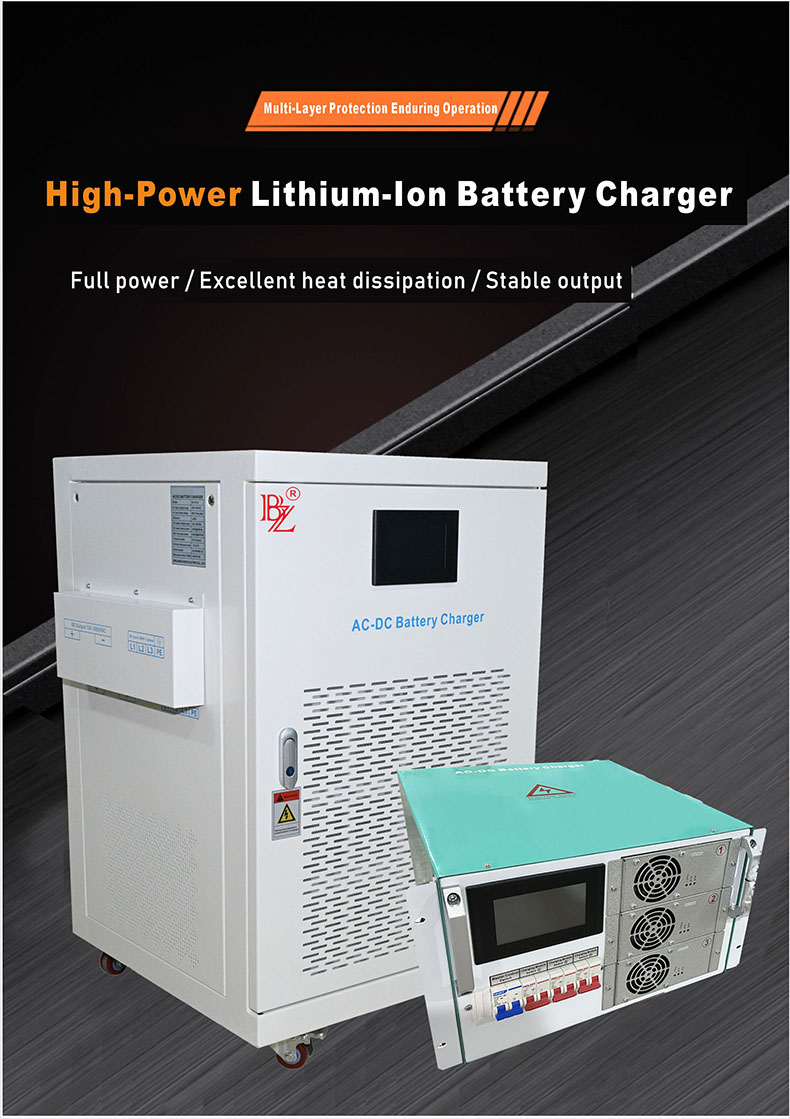
Investing in a high-quality "3 phase battery charger" can significantly enhance your operations, particularly for industries that rely on continuous and heavy power consumption. Here are some notable advantages: "Faster Charging" A "fast-charging 3 phase battery charger" optimizes charging time, ensuring that operations dependent on large batteries, such as those in electric forklifts or EVs, can proceed without delays. "Reliable Performance" With consistent power delivery from three-phase systems, you can avoid voltage fluctuations that might reduce the lifespan of your battery chargers or connected devices. "Energy Efficiency" Three-phase systems are built for efficiency, wasting less energy during conversion and transfer into your batteries. This reduces costs significantly in the long term. "Scalability" As businesses grow, their power demands typically increase. Three-phase power systems, along with "industrial battery chargers", handle this increase without major upgrades. "Durability" Components in three-phase systems often last longer due to better power stability and a balanced load distribution.
When to Use Single-Phase vs. Three-Phase Power
The best power system for your application depends on your energy consumption needs and specific use case. "Single-Phase Power" Perfect for residential systems, small businesses, or low-energy appliances. If you only need to power a standard charger like a "vehicle battery charger" or basic household equipment, single-phase will suffice. "Three-Phase Power" The better option for industries and businesses requiring high energy output. It is an optimal solution for running a "480V 3 Phase Battery Charger", machinery, and industrial tools thanks to its ability to deliver consistent, stable power with higher efficiency.
FAQ
Is 240V single-phase or 3-phase? In most cases, "240V is single-phase" and is commonly used in residential applications like air conditioners, kitchen appliances, or smaller chargers. However, there are instances where 240V power can be found in three-phase configurations, especially in commercial or industrial settings. Why should I opt for a 3 phase charger instead of a single-phase one? If you operate in an industrial setting or require high-capacity charging, a "3 phase battery charger" offers faster charging, better efficiency, and reliability compared to a single-phase charger. It is ideal for heavy machinery, vehicle battery systems, and demanding applications. Can I use single-phase equipment on a three-phase power system?Yes, this is possible, but you’ll need additional equipment like a phase converter to make the system compatible. However, this approach is often less efficient and may not leverage the full advantages of three-phase power.Is three-phase power expensive to install?The initial installation of three-phase systems might cost more than single-phase setUPS due to the additional wiring and equipment. However, these costs are often outweighed by lower energy bills, improved performance, and long-term efficiency in high-demand applications.
Conclusion
Ultimately, the choice between single-phase and three-phase power comes down to your specific requirements. For basic residential or smaller-scale commercial setups, single-phase power paired with a "240V single-phase charger" can efficiently meet your needs. However, for larger industrial operations requiring substantial energy, three-phase power and a "480V 3 phase battery charger** provide unparalleled efficiency, reliability, and cost savings. Understanding your power consumption needs is crucial before you make a decision. If speed, efficiency, and scalability are your priorities, a "3 phase battery charger" is the superior choice, ensuring smooth operations even in power-intense environments.